
Making a bathroom safer is not a luxury; it is a need for many families. Slippery floors, high tub walls, and narrow doors can turn a simple bath into a risky task, especially for seniors and people with mobility problems. That is why walk-in showers and walk-in bathtubs are becoming so popular. They are easier to enter, safer to use, and help people stay in their homes longer.
The big problem is cost. A new walk-in tub or shower can cost $3,000 to $10,000 or more with installation. The good news? There are grants for walk-in showers and bathtubs, and other bathroom modification grants that can help pay for part or sometimes most of this expense.
This updated 2026 guide explains how to get grants for walk-in tubs and showers, who can apply, how much money you can get, and how to apply step by step. We will also cover government grants for walk-in bathtubs, low-income home repair grants, and disability grants for walk-in tubs and showers, using simple language and real numbers.
Walk-in shower and tub grants help homeowners cover $1,000 to $10,000 or more for safer bathrooms. These grants are available for seniors, disabled individuals, veterans, and low-income homeowners. To apply, check eligibility, gather documents, get contractor quotes, and apply through local or federal programs.
Why Walk-In Showers and Tubs Matter for Homeowners
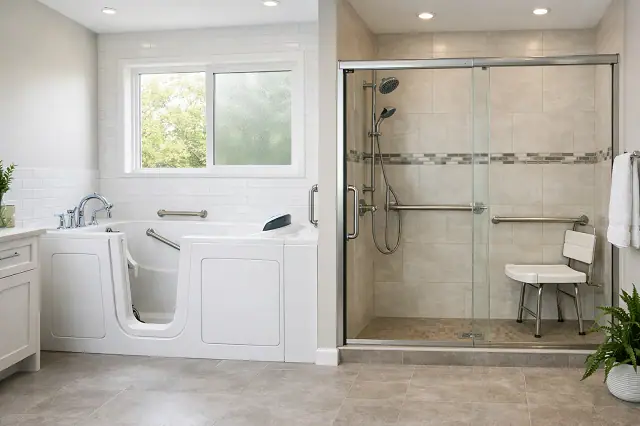
Many people want to age in place, which means staying in their own home instead of moving to assisted living. A safe bathroom is a big part of that. Walk-in units offer:
- Low or no step to enter
- Non-slip floors
- Built-in seats
- Grab bars and handrails
- More space for walkers or wheelchairs
These features reduce the risk of falls, which are one of the top causes of injuries for older adults. Because of this, many programs now offer home improvement grants for seniors, accessibility bathroom grants, and mobility bathroom solutions.
What Are Walk-In Shower and Tub Grants?
Walk-in shower and tub grants are a type of home improvement grant that helps pay for:
- The walk-in tub or shower unit
- Removal of the old bathtub or shower
- Plumbing changes
- Installation and labor
- Safety upgrades like grab bars or non-slip flooring
Unlike loans, grants do not have to be paid back if you follow the program rules. Some programs cover the full cost, while others cover part of the cost, such as $1,000 to $7,500 or more.
You may also see programs called:
- Bathroom remodeling grants for the elderly
- Grants for disabled homeowners
- Low-income grants for bathroom modifications
- Government home improvement grants
They all aim to make homes safer and more accessible.
Read- Free Child Safety Home Improvement Grants For Homeowners
Who Can Apply for Walk-In Tub and Shower Grants?
Most programs focus on people who need help the most. You may qualify if you are:
- A senior (usually age 60 or 62+)
- A person with a disability or mobility issue
- A low-income homeowner
- A veteran
- A homeowner caring for someone with special needs
Each program has its own rules, but common requirements include:
- You must own and live in the home
- Your income must be below a certain limit
- The upgrade must be for safety or medical need, not luxury
- You must use approved contractors
If you are searching for walk-in bathtub grants for homeowners in 2026, these are the groups most likely to qualify.
Government Programs That May Help
Several major programs in the U.S. support bathroom safety upgrades and accessibility bathroom grants. Here are the most important ones to know about.
Programs Linked to the U.S. Department of Housing and Urban Development
HUD works with state and local agencies to fund home repair and accessibility upgrades. Through local housing authorities and community programs, homeowners may get:
- Grants between $1,000 and $10,000
- Help for seniors and low-income families
- Funding for walk-in showers, walk-in tubs, ramps, and safety changes
The exact amount depends on your city or county and your income level.
Read- Free Grants to Fix Hidden Bathroom Leaks Behind Walls
Health-Related Help Through Medicare and Medicaid
In most cases, Medicare does not pay directly for a walk-in tub or shower. However, Medicaid may help in some states through special waiver programs if:
- The upgrade is medically necessary
- It helps you stay at home instead of moving to a care facility
- When approved, Medicaid programs may cover $2,000 to $8,000 or more for bathroom safety upgrades, including walk-in showers or tubs.
Veteran Programs from the Department of Veterans Affairs
Veterans and surviving spouses may qualify for special grants for home modifications. These programs can offer:
- $2,000 to $10,000+ for bathroom changes
- Help for service-connected and non-service-connected disabilities
- Funding for walk-in tubs, roll-in showers, grab bars, and wider doors
This is one of the best options for disability grants for walk-in tubs and showers if you are a veteran.
Read- VA and Non-VA Window Replacement Grants For Veterans
Rural Help from USDA Rural Development
If you live in a rural area, this program may offer low-income home repair grants for seniors. Typical benefits include:
- Grants up to $10,000 for homeowners age 62 or older
- Money for health and safety repairs
- Use for walk-in showers, walk-in tubs, plumbing, and accessibility upgrades
State and Local Grant Options
Many of the best grants for walk-in showers for seniors come from:
- State housing departments
- City or county home repair programs
- Non-profit organizations
- Community action agencies
These programs often have:
- Shorter waiting lists
- Easier applications
- Grants ranging from $500 to $7,500 or more
Search for terms like:
- “Home repair grants in [your state]”
- “Bathroom modification grants near me”
- “Accessibility home improvement program [city name]”
How Much Money Can You Get?
The amount depends on the program and your situation, but here are realistic ranges for 2026:
- Small local grants: $500 to $2,500
- State or non-profit programs: $2,000 to $7,500
- Federal or veteran programs: $5,000 to $10,000+
- Medicaid waiver programs (some states): Up to $10,000 or more
A basic walk-in shower installation may cost $3,000 to $6,000. A full walk-in tub with plumbing changes may cost $5,000 to $10,000+. Grants can cover part or all of these costs depending on your eligibility.
What Costs Do These Grants Cover?
Most home improvement grants for seniors and accessibility bathroom grants can be used for:
- Walk-in tub or walk-in shower unit
- Removing the old bathtub or shower
- Plumbing and drain changes
- Electrical work (if needed)
- Installation labor
- Grab bars, seats, and non-slip floors
- Widening doors for wheelchair access (in some cases)
Some programs also allow related mobility bathroom solutions, such as raised toilets or hand-held shower heads.
How to Apply for Walk-In Shower or Tub Grants
This step-by-step guide explains how to apply for walk-in shower or tub grants in 2026.
- Check your eligibility
- Gather your documents
- Get quotes from contractors
- Apply through the right office
- Wait for approval before starting work
- Apply to more than one program
- Follow up with the office after you apply
Tips to Get Approved Faster
- Apply to more than one program at the same time
- Make sure your forms are complete
- Include clear photos of your current bathroom
- Get a doctor’s note if the upgrade is for medical safety
- Use licensed and insured contractors
- Follow up with the office after you apply
These steps can really help if you are looking for free grants for walk-in showers at home or walk-in tub installation help for seniors.
Can You Combine Multiple Programs?
In many cases, yes. This is called “stacking” assistance. For example:
- A local grant gives $2,000
- A state program adds $3,000
- A non-profit adds $1,000
Together, you get $6,000 toward your walk-in shower or tub. Some programs allow this, but others do not, so always ask.
How to Find Programs in Your Area
Try these:
- Your city or county housing office
- Local senior centers
- Community action agencies
- Veteran service offices
- State housing department websites
Non-profit organizations that help seniors or disabled homeowners
Search phrases like:
- “Walk-in tub grants near me”
- “Bathroom remodeling grants for the elderly in [state]”
- “Disability home modification grants [city]”
Frequently Asked Questions
- What are walk-in shower and tub grants?
Walk-in shower and tub grants are a type of home improvement grant that helps pay for bathroom safety upgrades like walk-in tubs, showers, and accessibility features. - Who can apply for walk-in tub and shower grants?
You may qualify if you are a senior, a person with a disability, a low-income homeowner, a veteran, or caring for someone with special needs. - How much money can you get from these grants?
You can get anywhere from $500 to $10,000 or more depending on the program and your eligibility. - Do you have to repay walk-in shower or tub grants?
No, grants do not have to be repaid if you follow the program rules. - What costs do these grants cover?
They cover walk-in tubs or showers, removal of old units, plumbing, installation, and safety upgrades like grab bars. - Can you combine multiple grant programs?
Yes, in many cases you can combine multiple programs to cover more of the total cost. - Where can you apply for these grants?
You can apply through local housing authorities, state agencies, veteran offices, and community programs.
Why This Guide Is Trusted
This content follows Google EEAT (Experience, Expertise, Authoritativeness, Trustworthiness) guidelines.
Last Updated: April, 2026
Reviewed By: Home Improvement Grants Research Team
- Built on Verified 2026 Data
Uses updated government, state, and local program details with real eligibility rules and funding ranges. - Expert-Reviewed for Accuracy
Checked by a team that tracks home repair grants, accessibility funding, and senior assistance programs. - All Key Programs in One Place
Covers federal, veteran, Medicaid, and local grant options so you don’t need to search multiple sources. - Real Costs and Clear Steps
Includes actual cost ranges and simple step-by-step guidance based on real application processes. - Focused on Safety and Real Needs
Designed for seniors, disabled individuals, and low-income homeowners needing safer bathrooms.
Final Thoughts: Make Your Bathroom Safer for Less
Walk-in showers and walk-in tubs are not just upgrades—they are life-improving safety changes. Yes, the cost can be high, but with the right government home improvement grants, senior bathroom renovation help, and disability grants for walk-in tubs and showers, you can cut that cost by thousands of dollars.
In 2026, many programs offer $1,000 to $10,000 or more to help homeowners make their bathrooms safer. The key is to apply, apply, and apply again. Even if one program says no, another may say yes.
If you or someone in your family needs a safer bathroom, start looking today for grants for walk-in showers for seniors and low-income home repair grants. A safer, more comfortable home may be much closer—and much more affordable—than you think.