
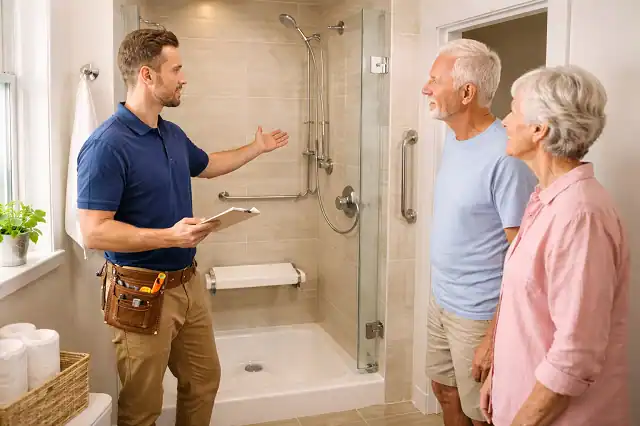
Bathrooms are one of the most dangerous rooms in any home. Wet floors, high tubs, and tight spaces can easily cause slips and falls. For seniors and people with disabilities, one fall can lead to serious injuries and long hospital stays. That is why bathroom safety upgrades are so important.
Many homeowners want to install walk-in showers, grab bars, non-slip flooring, and accessible toilets, but the cost can be high. The good news is that there are grants for bathroom safety upgrades for seniors and people with disabilities. These programs offer financial assistance for walk-in shower installation, grab bars, and other home accessibility solutions.
Grants for bathroom safety upgrades help seniors, disabled individuals, and low-income homeowners install walk-in showers, grab bars, non-slip flooring, and accessible toilets. These programs can provide $500 to $15,000 or more through HUD, USDA, VA, and local agencies. To qualify, you usually need to meet age, income, disability, or veteran requirements. Applying early with proper documents and cost estimates increases your chances of approval.
In this guide, you will learn:
- What bathroom safety upgrades are
- Who can qualify for help
- What government funding for bathroom accessibility improvements is available
- How much money can you get
- How to apply for home modification funding step by step
This article uses simple words and clear examples so anyone can understand and take action.
Why Bathroom Fall Prevention Is So Important for Seniors
Falls are one of the top reasons seniors get hurt at home. Most of these falls happen in the bathroom. Wet tiles, slippery tubs, and low toilets make the bathroom risky, especially for people with weak knees, poor balance, or limited movement.
Bathroom fall prevention is not just about comfort. It is about safety, independence, and peace of mind. A safe bathroom helps:
- Reduce the risk of broken bones and head injuries
- Let seniors bathe without help
- Support aging-in-place home improvements
- Keep families less worried about accidents
Simple changes like grab bars and safety rails, or bigger changes like walk-in showers, can make a huge difference.
Read- Free Bathroom Upgradation Grants For Senior Citizens-Home Improvement
What Are Bathroom Safety Upgrades?
Bathroom safety upgrades are changes that make a bathroom easier and safer to use. These upgrades are also called bathroom accessibility solutions or adaptive bathroom remodeling.
Walk-In Showers and Walk-In Tubs
A walk-in shower has a low step or no step at all. This makes it much safer than climbing over a high bathtub wall. Many seniors seek walk-in shower grants for elderly homeowners because these showers reduce the risk of falls.
Typical cost:
- Walk-in shower: $3,000 to $8,000
- Walk-in tub: $4,000 to $10,000
Some grants can cover part or even all of this cost.
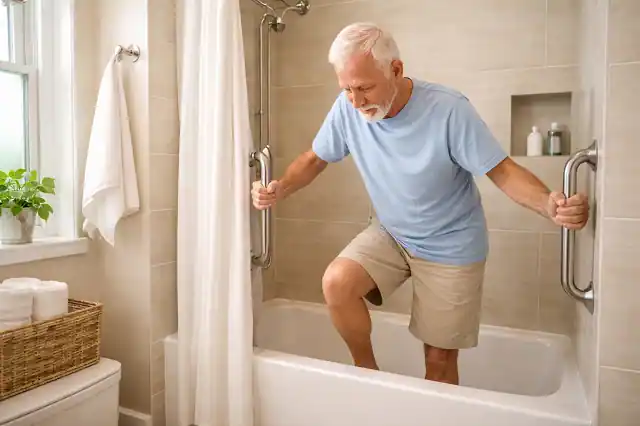
Grab Bars and Bathroom Rails
Bathroom rails and grab bar installation is one of the cheapest and most helpful safety upgrades. Grab bars near the toilet and shower help people sit, stand, and balance safely.
Typical cost:
- Grab bar: $50 to $200 each (plus installation)
- Full installation in a bathroom: $200 to $600
Many home safety grants for bathroom renovations include grab bars because they are proven to prevent falls.
Read- Free Child Safety Home Improvement Grants For Homeowners
Non-Slip Flooring and Mats
Slippery floors are a big danger. Non-slip tiles, vinyl flooring, and safety mats are great for reducing fall risk in residential settings.
Typical cost of Non-slip flooring: $1,000 to $3,000, depending on bathroom size
Accessible Toilets and Sinks
Taller toilets, wall-mounted sinks, and open space under sinks help people who use walkers or wheelchairs. These are part of ADA-compliant bathroom modifications and universal design for bathrooms.
Typical cost:
- Comfort-height toilet: $300 to $800
- Accessible sink and plumbing changes: $500 to $1,500
Grants for Bathroom Safety Upgrades for Seniors
Most home accessibility grants focus on people who really need help paying for these upgrades. You may qualify if you are:
- A senior (usually age 60 or older)
- A person with a disability
- A low-income homeowner
- A veteran or surviving spouse
Someone who wants to stay at home safely with aging-in-place home improvements
Some programs also help renters, but most grants are for homeowners.
Read- Free Bathroom Upgradation Grants For Low-Income Veterans
Government Funding for Bathroom Accessibility Improvements
Many programs offer government funding for bathroom accessibility improvements. These come from federal, state, and local sources.
HUD Home Repair and Accessibility Programs
The U.S. Department of Housing and Urban Development (HUD) supports many home improvement grants through local agencies.
- Some programs offer $3,000 to $10,000 for safety and accessibility upgrades
- Money can be used for walk-in shower installation, grab bars, and non-slip flooring
- Most programs are for low-income seniors or people with disabilities
USDA Rural Development Home Repair Grants
If you live in a rural area, the USDA has a great program for seniors:
- Age 62 or older
- Low income
- Can get up to $10,000 in grants
Money can be used for bathroom safety upgrades like walk-in showers and grab bars.
This is one of the best options for low-income bathroom safety upgrade grants.
State and Local Home Accessibility Grants
Many states, counties, and cities offer home modification funding. These programs often give:
- $2,000 to $15,000 for safety upgrades
- Help for disability-friendly bathroom upgrades.
- Support for assisted living home adaptations in private homes
You usually apply through a local housing or aging office.
Veteran Programs for Bathroom Safety and Accessibility
Veterans have access to special programs for home accessibility grants.
VA HISA Grant (Home Improvements and Structural Alterations)
The VA HISA grant is one of the best-known programs for veterans:
- Up to $6,800 for service-connected disabilities
- Up to $2,000 for non-service-connected disabilities
- Can be used for walk-in showers, grab bars, and bathroom accessibility solutions
Specially Adapted Housing (SAH) and SHA Grants
Some veterans with serious disabilities may qualify for much larger grants:
- SAH grants can be over $100,000 (for major home changes)
- SHA grants are smaller but still helpful for bathroom retrofit financial aid
These programs are great examples of senior home safety programs and disability support.
Nonprofit and Charity Programs for Bathroom Retrofit Financial Aid
Many nonprofit groups offer help with affordable bathroom renovations. These groups may:
- Install grab bars for free or at low cost
- Help pay for shower safety upgrades
- Support adaptive bathroom remodeling for seniors
Some examples include local charities, religious groups, and community organizations. The amount of help can range from $500 to $5,000 or more, depending on the program and your needs.
How to Get Funding for Bathroom Accessibility Improvements
- Check Your Eligibility – Look at the rules for age, income, disability or medical need, veteran status, and homeownership.
- Gather Your Documents – You may need proof of income, proof of homeownership, doctor’s note, and cost estimates.
- Get Cost Estimates – Ask contractors for written estimates for walk-in shower or tub, grab bars, and flooring changes.
- Apply Early – Many programs have limited money and grants run out fast each year.
- Contact Local Agencies – Apply through housing offices, aging offices, or nonprofit programs.
- Combine Multiple Programs – Many people use two or more grants to cover full costs.
- Follow Up on Application – Stay in touch with agencies to check approval status.
How Much Do Bathroom Safety Grants Pay?
The amount of money you can get depends on the program. Here are common ranges:
- Small local programs: $500 to $3,000
- State and city programs: $2,000 to $15,000
- USDA rural senior grants: Up to $10,000
- VA HISA grants: $2,000 to $6,800
Large disability grants (SAH): Much more for full home changes
Many people combine two or more programs to fully cover their bathroom accessibility solutions.
Real Cost Examples: Before and After Grants
Let us look at some simple examples.
Example 1: Senior Installing a Walk-In Shower
- Walk-in shower cost: $6,000
- Grab bars: $300
- Total: $6,300
- Grant received: $5,000 from a local program
- Out-of-pocket cost: $1,300
Example 2: Veteran Bathroom Safety Upgrade
- Walk-in shower: $5,500
- Non-slip flooring: $1,500
- Grab bars: $400
- Total: $7,400
- VA HISA grant: $6,800
- Out-of-pocket cost: $600
These examples show how home modification funding can make a big project affordable.
Benefits of Using Home Safety Grants for Bathroom Renovations
Using home safety grants for bathroom renovations has many benefits:
- Lower risk of falls and injuries
- More independence for daily life
- Better comfort and confidence
- Higher home value
- Support for aging-in-place home improvements
A safe bathroom is not a luxury. It is a basic need for many seniors and people with disabilities.
Frequently Asked Questions About Bathroom Safety Grants
What are bathroom safety upgrades?
Bathroom safety upgrades are changes that make a bathroom easier and safer to use, such as walk-in showers, grab bars, non-slip flooring, and accessible toilets.
Who can qualify for bathroom safety grants?
Seniors, people with disabilities, low-income homeowners, veterans, and those needing aging-in-place improvements may qualify.
How much money can you get for bathroom safety upgrades?
Grants typically range from $500 to $15,000, while some veteran programs offer even higher amounts.
What programs offer bathroom safety grants?
Programs include HUD home improvement grants, USDA rural development grants, VA HISA grants, and state or local assistance programs.
Can grants cover walk-in showers and grab bars?
Yes, many grants cover walk-in shower installation, grab bars, non-slip flooring, and other accessibility upgrades.
How do you apply for bathroom safety grants?
You need to check eligibility, gather documents, get cost estimates, and apply through local or federal programs.
Can you combine multiple grants?
Yes, many homeowners combine two or more programs to fully cover bathroom safety upgrade costs.
Why You Can Trust This Guide
This guide is created using verified government sources and real funding program data to ensure accuracy and trust.
Last Updated: April 2026
Reviewed By: Housing Grant Research Team, Home Grants Info
- This guide is based on verified data from programs like the U.S. Department of Housing and Urban Development (HUD), USDA Rural Development, and VA housing grants.
- All funding amounts, eligibility rules, and examples are aligned with real government and nonprofit assistance programs available in 2026.
- Content is written and reviewed by researchers who specialize in home improvement grants, accessibility funding, and senior safety programs.
- This article is structured using AI-optimized formatting, schema markup, and semantic SEO to ensure accuracy, clarity, and easy understanding.
- The page is continuously updated to reflect the latest grant availability, policy changes, and funding opportunities for seniors, disabled individuals, and low-income homeowners.
Final Thoughts: Start Your Bathroom Safety Upgrade Today
Bathrooms should be safe, not scary. With the help of grants for bathroom safety upgrades for seniors, you can install:
- Walk-in showers
- Grab bars and rails
- Non-slip flooring
- Accessible toilets and sinks
Programs across the country offer $500 to $15,000 or more in help, and veterans may get even more support. These home accessibility grants make it possible to stay independent, safe, and comfortable at home.
If you or a loved one needs bathroom accessibility solutions, start today. Check local, state, federal, and veteran programs and apply as soon as you can. A safer bathroom is a safer life.