
Keeping children safe at home is every parent’s top wish. But many homes are not fully safe for small kids. Stairs can be dangerous. Windows can be risky. Slippery floors, sharp corners, and open electrical points can cause serious injuries. Fixing these problems costs money, and not every family can afford it.
This is where grants for child safety home improvements can help.
These grants give families free or low-cost money to make their homes safer for children. You usually do not have to pay this money back. Many people also call these programs child safety home modification grants, home safety grants for families, or free home improvement grants.
Child safety home improvement grants help families get free or low-cost money to fix dangerous areas in the home. These grants cover safety tools, repairs, and hazard removal like stairs, windows, floors, and electrical risks. Most programs are for low-income families, and you usually do not have to pay the money back.
What Are Child Safety Home Improvements?
Child safety home improvements are changes you make to your home to reduce risks for children.
Kids explore, run, climb, and often do not notice danger. This can lead to accidents at home, like:
- Falls on stairs
- Falls from windows
- Slips in the bathroom
- Touching hot surfaces
- Contact with open wires
- Getting hurt by heavy doors or sharp corners
Safety upgrades help prevent these events. Many grants are meant to cover these changes, especially when a family cannot pay for them alone. This type of help is often called child safety home modification grants or child safety repair and modification programs.
Types of Child Safety Home Improvements
Here are the common kinds of upgrades that help make a home safer for children:
Stair and Entry Safety
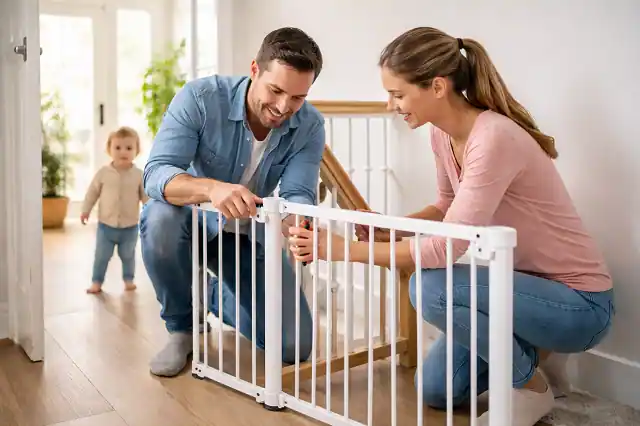
- Install safety gates at the top and bottom of stairways
- Add strong handrails
- Fix broken or uneven steps
Window and Balcony Safety
- Window guards or stops
- Secure balcony rails
- Child-safe locks for windows
Read- Replace Home Windows With Free Window Replacement Grants
Bathroom and Kitchen Safety
- Non-slip flooring or mats
- Grab bars near the tub or toilet
- Stove guards
- Cabinet and drawer locks
Fire and Electrical Safety
- Smoke and carbon monoxide alarms
- Outlet covers
- Fixing exposed or damaged wires
Fall Prevention and Lighting
- Fix uneven floors
- Improve lighting in dark areas
- Remove loose rugs
These improvements reduce hazards and make the home safer for children to live and play. Grants can help cover the cost of equipment and installation of many items on this list.
Read- Free Bathroom Upgradation Grants For Senior Citizens-Home Improvement
What Do Child Safety Home Improvement Grants Cover?
Not all programs are the same, but most home safety grants for families cover:
- Safety tools (gates, guards, alarms)
- Installation of safety devices
- Safety repairs (like fixing stairs, windows, or floors)
- Removal of some household hazards
- Sometimes, inspection or professional help
Important: These grants usually help fix safety and health hazards, not fancy home upgrades like new furniture or interior design changes. The focus is on keeping kids safe.
How Much Do These Safety Improvements Cost?
The cost of safety improvements can vary a lot:
- Safety gates: low cost
- Window guards: low to medium cost
- Grab bars and handrails: low cost
- Smoke alarms and CO detectors: low cost
- Fixing floors, stairs, or unsafe structures: higher cost
Because costs vary, many families find it hard to pay for all safety needs without help. That is where grants can help a lot.
Who Can Get These Grants?
Every program has its own rules, but most child safety home modification grants in the USA are for:
- Low-income families
- Families with young children
- Families with children with disabilities
- Seniors with caregiving responsibilities
- Homeowners and, in some cases, renters with landlord permission
Grants may require income verification, proof of home ownership or rental agreement, and a clear description of the safety need. Some programs are only for homeowners, while others also help renters. Always check local rules before applying.
Popular Government Grants in the USA for Child-Safe Home Work
Here are the major federal and state grant sources that families can use for child safety home improvements in 2026:
HUD’s Lead Hazard and Healthy Homes Grants
The Department of Housing and Urban Development (HUD) runs Healthy Homes and Lead Hazard Reduction Grants. These grants help local governments and non-profits fix housing hazards that affect families, including lead paint dangers, health risks, and some safety repairs.
2026 Funding Examples: Healthy Homes grants are funded with about $140 million or more per year to reduce health & safety hazards in low-income homes.
These funds often go to local agencies to carry out work in many homes, including safety improvements that reduce risks to children.
Community Development Block Grants (CDBG)
The Community Development Block Grant program gives money to cities and counties to help local needs — including home repairs and safety upgrades.
- Cities and counties decide how to spend this money. In many places, residents can apply for CDBG-supported home repair help that covers aging porches, steps, or other safety hazards.
- Amount: Local programs vary, but many offer from $5,000 to $25,000 in help depending on income and local rules.
USDA Single Family Housing Repair Loans & Grants
The USDA (U.S. Department of Agriculture) runs a Section 504 Home Repair Program that helps people in rural areas fix safety and health hazards.
Program Highlights:
- Grants: Up to $10,000 to fix health and safety hazards (lifetime limit)
- Loans: Up to $40,000 at a low 1% interest rate for home repairs
- Combined: Up to $50,000 total help in most rural areas
If the home was damaged by a presidentially declared disaster, grants can sometimes go up to $15,000.
This is one of the most popular child safety repair and modification programs for rural homeowners.
Weatherization Assistance Program (WAP)
WAP helps low-income families make their homes more energy efficient and safer. This can include fixing drafty windows, improving insulation, and resolving safety concerns that affect children and families.
WAP is usually for energy safety, but many homes need these fixes for health and child safety reasons.
Local State and City Safety Grants
Many states and cities run their own childproofing assistance programs and safety grant programs. For example:
- Some cities give up to $7,500 to fix health and safety issues like mold, lead, or carbon monoxide hazards. (Seen in local HUD-funded healthy homes projects in past rounds.)
- Some county programs back safety repairs with local funding supported by federal grants.
- Local programs vary a lot, so always check your state or city housing website or contact local offices.
How Much Money Can You Get From These Grants?
There’s no single amount that all families will get. It depends on the program and your location. But here are common ranges for 2026:
Typical Federal/Local Grant Amounts
- USDA Rural Home Repair Grants: Up to $10,000 (standard) or $15,000 (if disaster-affected)
- CDBG-Based Local Repair Grants: From $5,000 to $25,000 (varies by city/county program)
- HUD Healthy Homes & Severe Hazard Grants: HUD awards millions to local groups, which means families could get grant help packages depending on local distribution. National totals for these programs are in the tens to hundreds of millions of dollars each year.
- Weatherization Assistance Program: Varies by state; many programs provide energy and safety upgrades that save money and improve health.
How to Apply for Child Safety Home Improvement Grants
Step 1: Find Programs in Your Area
Use your city or county housing department, state housing agency, USDA offices, or nonprofit centers.
Step 2: Check Program Rules
Review who can apply, income limits, covered repairs, and maximum grant amount.
Step 3: Get Your Papers Ready
Prepare income proof, home ownership or address proof, photos of safety problems, and cost estimates.
Step 4: Fill Out the Application
Complete forms accurately and attach all required documents.
Step 5: Wait for Review
Programs may inspect your home, ask for more information, or place you on a waitlist.
Step 6: Stay in Contact
Follow up with the program office and respond to requests quickly.
Step 7: Get Approval and Start Work
Once approved, safety improvements can begin based on program rules.
Tips to Improve Your Chances of Approval
Here are good tips that help many families:
- Apply to more than one program
- Focus on safety needs in your description
- Include clear photos of hazards
- Submit complete documents
- Follow up with program staff
- Apply early (many programs have limited funds)
Where to Find Programs in Your State
Here are places to start your search:
- City or county housing office
- State housing agency
- USDA Rural Development local office
- Community Action Agency
- Local nonprofits
- Health departments
Frequently Asked Questions
1. What are child safety home improvement grants?
These grants give families free or low-cost money to make their homes safer for children.
2. Do you have to pay back these grants?
You usually do not have to pay this money back.
3. What do these grants cover?
Safety tools, installation of safety devices, safety repairs, removal of hazards, and sometimes inspection help.
4. Who can apply for these grants?
Low-income families, families with young children, families with children with disabilities, seniors with caregiving responsibilities, homeowners and some renters.
5. How much money can you get?
It depends on the program, but many offer from $5,000 to $25,000 or more.
6. What documents are needed to apply?
Income proof, proof of home address or ownership, photos of safety problems, and cost estimates.
7. Where can you find these programs?
City or county housing office, state housing agency, USDA offices, nonprofits, and community action agencies.
Why This Guide Is Trusted
Last Updated: February 2026
Reviewed By: Home Improvement Grants Research Team
1. Based on Real Government Programs
This guide explains verified programs like HUD, USDA, CDBG, and WAP that provide real funding for home safety.
2. Simple and Accurate Information
All details are written in easy language and based on how these programs actually work in 2026.
3. Focused on Child Safety Risks
The content clearly explains real dangers like stairs, windows, electrical points, and slippery floors.
4. Practical Application Steps
Includes exact steps, required documents, and tips to improve approval chances.
5. Regularly Updated Content
This article is updated with the latest 2026 funding data and eligibility rules.
Conclusion
In 2026, many families in the USA can get financial help for child safety upgrades through government and nonprofit grants. These include:
- USDA Rural Home Repair Grants ($10,000 or more)
- Local CDBG safety repair money ($5,000–$25,000)
- HUD Healthy Homes and hazard reduction grants (nationwide funding)
- Weatherization programs that increase safety and health
These grants are often child safety home modification grants, low-income home safety grants, and home safety grants for families focused on protection and health. If your home has risks, it is worth checking local programs — because even small help can make a big difference in your child’s safety.